Wisdom dental care is mainly about knowing what is normal, what needs monitoring and what symptoms should be assessed by a dentist. Wisdom teeth are the last adult molars to appear, usually in the late teens or twenties, and they do not always cause problems. Some come through fully and can be cleaned like other molars. Others only partly erupt, remain trapped under the gum or sit at an angle that makes cleaning difficult. If you are noticing jaw soreness, swollen gums, bad taste, trouble opening your mouth or pain near the back teeth, a dental examination can help identify the cause and explain your options.
What wisdom dental care involves
Wisdom teeth are also called third molars. Most adults can have up to four, one at the back of each corner of the mouth, although some people have fewer or none. Their position varies from person to person, which is why advice should be based on an examination rather than age alone.
In practical terms, wisdom dental care includes keeping the area clean, watching for changes and having a dentist assess wisdom teeth that are painful, partly erupted or difficult to brush. It may also involve dental X-rays to check the tooth position under the gum and its relationship to nearby structures.
Not every wisdom tooth needs to be removed. If a wisdom tooth has come through properly, has enough space, bites comfortably and can be cleaned well, your dentist may simply monitor it at routine check-ups.
Why wisdom teeth can cause problems
Wisdom teeth often create issues because they are the last molars to develop and there may not be enough room at the back of the jaw. A tooth that cannot come through normally is called impacted. Impacted wisdom teeth may remain fully under the gum, partly break through or press against the tooth beside them.
Partly erupted wisdom teeth can be especially hard to clean. Food and bacteria may collect under a small flap of gum, which can lead to inflammation or infection around the tooth. This is called pericoronitis. Healthdirect Australia explains that impacted wisdom teeth can sometimes cause pain, swelling or infection, although some impacted teeth cause no symptoms and are found during a dental check.
Wisdom teeth may also be associated with decay in the wisdom tooth itself or the second molar in front of it, gum problems, cysts or ongoing food trapping. These issues are not always visible at home, which is one reason X-rays may be recommended.
| What you may notice | What it could suggest | When to arrange dental advice |
|---|---|---|
| Mild tenderness behind the last molar | Eruption pressure or gum irritation | If it persists, recurs or affects eating |
| Swollen gum or a flap over the tooth | Food trapping or pericoronitis | As soon as practical, especially if worsening |
| Bad taste, pus or unpleasant breath from one area | Possible infection | Prompt assessment is recommended |
| Difficulty opening your mouth | Inflammation, infection or jaw muscle irritation | Prompt assessment is recommended |
| Facial swelling, fever or trouble swallowing | Possible spreading infection | Seek urgent dental or medical care |
Home care for wisdom teeth that have come through
Good wisdom dental care starts with careful cleaning, especially if the tooth is partly erupted or sits further back than the other molars. Use a soft toothbrush and take time to angle the bristles towards the gumline behind the last tooth. A small-headed toothbrush can make this easier for some people.
Flossing may be difficult if the wisdom tooth is crowded. Your dentist or oral health therapist can show you whether floss, interdental brushes or another cleaning aid may suit your mouth. Fluoride toothpaste is generally recommended for adults, and the Australian Dental Association's patient information site, Teeth.org.au, provides practical guidance on everyday oral hygiene through its healthy teeth resources.
A warm salt water rinse may help soothe mild gum irritation for some people, but it does not treat an infection or remove trapped debris under the gum. Avoid poking the area with sharp objects, as this can injure the gum and make inflammation worse.
If you want a broader refresher on brushing and interdental cleaning, CP Dental has a practical guide to good dental hygiene tips that covers everyday habits for teeth and gums.
When to see a dentist about wisdom teeth
You should consider booking a dental appointment if symptoms are persistent, worsening or keep returning. Wisdom tooth discomfort can settle and then flare again, particularly when food gets trapped under the gum or the tooth cannot be cleaned properly.
Signs that need assessment include:
- Pain at the back of the mouth that lasts more than a couple of days
- Swelling, redness or tenderness around the gum
- A bad taste, pus or fluid from around the tooth
- Difficulty chewing, opening your mouth or brushing the area
- Decay or a hole you can see or feel near the back molar
- Repeated episodes of gum infection around the same wisdom tooth
When wisdom dental care involves sudden or severe symptoms, it is better not to wait for a routine check-up. Facial swelling, fever, difficulty swallowing, difficulty breathing, uncontrolled bleeding or significant trauma should be treated as urgent. If you are unsure whether a painful tooth needs prompt care, CP Dental's article on when to seek dental care for a broken or painful tooth explains warning signs that should not be ignored.
What a wisdom tooth appointment may involve
A wisdom tooth appointment usually starts with questions about your symptoms, medical history, current medications and any previous dental treatment. Your dentist will examine the back of the mouth, check the gum around the tooth and assess nearby teeth.
Dental X-rays may be recommended to see the shape, angle and depth of the wisdom tooth. X-rays can also help your dentist assess whether the wisdom tooth is close to nerves, sinuses or the tooth in front of it. This information is important when discussing options and possible risks.
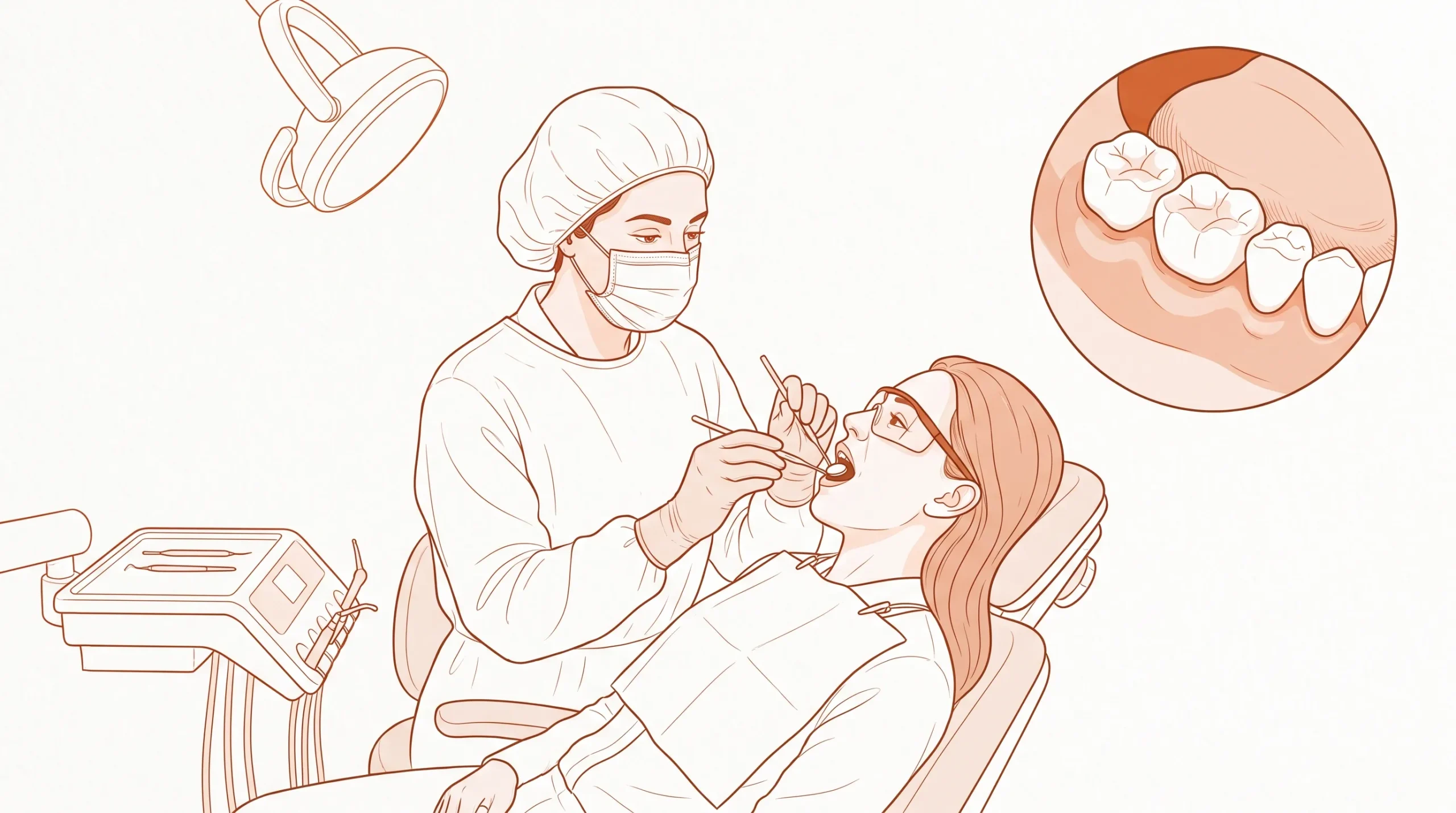
After the assessment, your dentist may discuss monitoring, improving cleaning around the tooth, treating gum inflammation, restoring decay or removing the tooth if clinically appropriate. A dentist-led approach to wisdom dental care should include the potential benefits, risks, alternatives and likely recovery considerations for your individual situation.
| Possible option | When it may be discussed | Points to consider |
|---|---|---|
| Monitoring | Tooth is healthy, functional and easy to clean | Regular reviews may be recommended |
| Cleaning advice | Gum irritation is linked to plaque or food trapping | May reduce irritation but may not solve impaction |
| Filling or restoration | Decay is present and the tooth can be accessed | Suitability depends on position and long-term cleanability |
| Tooth removal | Repeated infection, decay, damage to nearby teeth or other concerns | Requires discussion of risks, recovery and alternatives |
| Referral | Tooth position is complex or higher risk | Referral may be advised depending on assessment findings |
Does every wisdom tooth need removal?
No. Effective wisdom dental care does not automatically mean extraction. Removal may be considered when a wisdom tooth is causing repeated infection, decay, gum problems, damage to the tooth beside it or other concerns that are unlikely to be managed predictably with cleaning or monitoring alone.
Wisdom tooth removal is a dental procedure, so it carries potential benefits and risks. Risks can include pain, swelling, bleeding, infection, dry socket, limited mouth opening and, for some lower wisdom teeth, temporary or rarely longer-lasting numbness if nearby nerves are affected. The risk profile depends on the tooth position, root shape, age, medical history and other individual factors.
If removal is recommended, your dentist should explain what type of anaesthetic may be suitable. Some people only need local anaesthetic. In other situations, sedation or referral may be discussed, depending on the complexity of the procedure and the patient's medical needs.
For people who have already had wisdom teeth removed, CP Dental's guide to pain after wisdom teeth removal outlines common recovery experiences and when post-operative symptoms should be checked.
Wisdom teeth in teens and young adults
For young adults, wisdom dental care is often part of general oral health monitoring. Wisdom teeth commonly start to develop or erupt around the late teenage years or early adulthood, although timing varies. A dentist may notice wisdom tooth development on X-rays taken for other clinical reasons.
Parents sometimes ask whether teenagers should have wisdom teeth removed before they cause symptoms. There is no single answer that suits everyone. Some wisdom teeth can be monitored, while others may need treatment if they are likely to cause ongoing problems. Your dentist can explain what is visible on the X-ray, whether there are signs of current disease and what options may be appropriate.
This topic also connects with broader oral health changes in late adolescence, including diet, sport, orthodontic treatment, mouthguards and independent brushing habits. CP Dental's article on teens and young adults oral health covers these wider considerations.
Costs, recovery and practical questions
The cost of wisdom tooth care varies because the recommended treatment can range from a straightforward examination and X-ray to a complex removal. Fees may depend on the number of teeth involved, tooth position, appointment length, anaesthetic or sedation needs and whether referral is appropriate. Your dental team can provide an estimate after assessing your mouth and discussing the plan.
Recovery also varies. Some people return to normal activities quickly after a simple procedure, while others need more time if the tooth was impacted or the removal was more involved. Your dentist will usually provide instructions about eating, cleaning, bleeding control, physical activity and follow-up. Following those instructions may help reduce complications, although no procedure is risk-free.
If symptoms are changing, wisdom dental care should be guided by a proper examination rather than home remedies alone. Pain relief from a pharmacy may help with short-term discomfort for some people, but it will not address decay, infection, impaction or damage to nearby teeth.
Frequently asked questions
How do I know if my wisdom teeth are coming through normally? You may feel pressure or tenderness at the back of the mouth as a wisdom tooth erupts. The only reliable way to know whether it has enough space and is positioned well is to have a dental examination, and sometimes an X-ray.
Can wisdom tooth pain go away by itself? Mild discomfort can settle, especially if the tooth is erupting through the gum. Pain that returns, worsens or comes with swelling, bad taste, pus or difficulty opening your mouth should be assessed by a dentist.
Do antibiotics fix wisdom tooth infections? Antibiotics may be used in some dental infections when clinically appropriate, but they do not remove the cause if food trapping, decay or impaction is present. A dentist needs to assess the source of the problem and explain suitable options.
Is wisdom tooth removal always done in the dental chair? Not always. Some wisdom teeth can be removed in a dental setting with local anaesthetic, while more complex cases may require sedation or referral. Suitability depends on your medical history, tooth position and clinical assessment.
What should I do if my face is swollen from a wisdom tooth? Facial swelling, fever, trouble swallowing or difficulty breathing can indicate a serious infection. Seek urgent dental or medical care rather than waiting for symptoms to settle.
Discuss wisdom tooth concerns with CP Dental
Wisdom dental care is most useful when it is tailored to your mouth, symptoms and health history. A dental examination can help determine whether your wisdom teeth can be monitored, need improved cleaning, require treatment or should be considered for removal.
To discuss your concerns, you can book an appointment with the team at CP Dental at the Coopers Plains, Mater Hill or Emerald location through the CP Dental website. Your dentist can assess your oral health and explain the potential benefits, risks and alternatives for your situation.