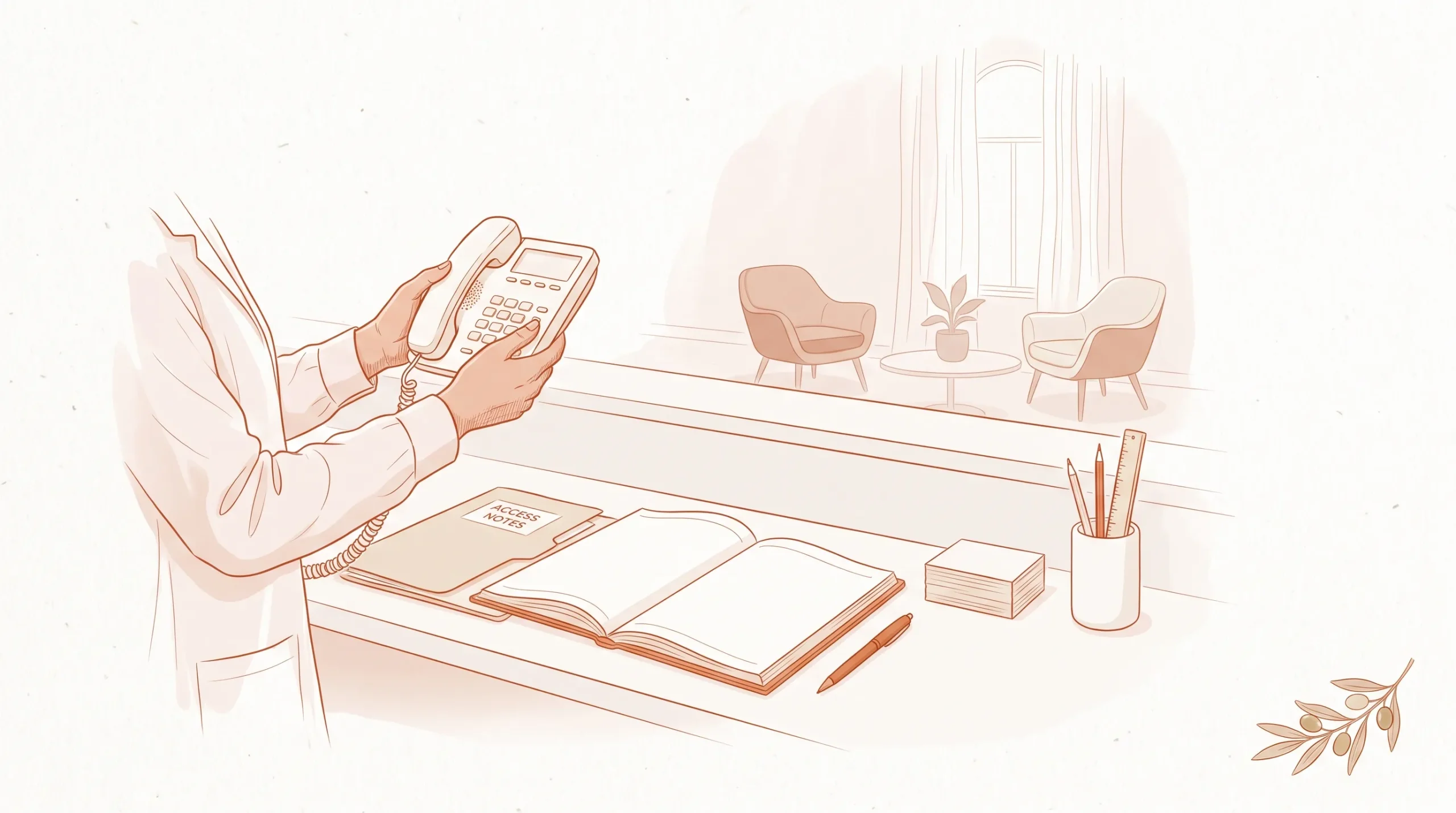
When calling a dentist phone number, start with who the appointment is for, whether they are a new or existing patient and the main reason for the call. If there is pain, swelling, bleeding or an injury, mention that before discussing preferred appointment times. You do not need to know the diagnosis or which treatment to request.
CP Dental sees patients at its Coopers Plains, Mater Hill and Emerald locations. This guide explains what information to share with reception so the team can understand your request and discuss an appropriate booking.
Start with a simple explanation
A short opening gives reception a useful starting point. You can use this template and fill in only the details that apply:
“Hello, I’d like to arrange an appointment for [myself/my child]. [I’m a new patient/we’ve visited before]. The main reason is [a check-up/a tooth concern/a discussion about treatment options].”
For a child, mention their age. If you have attended CP Dental before, say which location you usually visit and whether you would prefer to see the same dentist. Reception can check availability without assuming that your preferred practitioner is available.
Everyday descriptions are enough. “A filling has come out” or “I’d like to discuss the appearance of my teeth” is more useful than trying to name a procedure you may not need.
Calling a dentist phone number? Describe symptoms clearly
If something is uncomfortable or has changed, explain what you have noticed rather than trying to diagnose it. The most useful details are:
- Where it is: Upper or lower teeth, left or right side, or a particular area of the gums. It is fine if you cannot identify the exact tooth.
- When it began: Whether the problem started today, several days ago or has been coming and going.
- What it feels like: For example, a constant ache, discomfort when biting or sensitivity to hot and cold.
- What else has happened: Swelling, bleeding, a broken tooth, a recent injury or feeling generally unwell.
- How it affects you: Whether you can eat, sleep and open your mouth normally.
If you describe pain using a number out of ten, add what that means in practical terms. “It kept me awake last night” provides context that a number alone cannot.
Reception may need to pass these details to a clinician. Telephone information helps guide the booking, but it cannot replace a dental examination or confirm a diagnosis.
When to seek emergency medical help instead
If swelling makes breathing or swallowing difficult, call Triple Zero (000). Heavy bleeding that will not stop or a serious facial injury also needs emergency medical attention rather than waiting for a routine booking response.
Healthdirect’s advice on dental emergencies explains when urgent dental or medical care may be needed. For other new or worsening dental symptoms, tell reception promptly so they can discuss the next step with the clinical team.
Mention health, anxiety or communication needs
Before dialling a dentist phone number, think about anything that could affect how the appointment is arranged. Mention relevant health conditions, medicine allergies, pregnancy or a recent change in your health. You can ask whether the dentist needs further information before the visit.
Have an up-to-date medication list available, including prescribed medicines, over-the-counter products and supplements. You may not need to read the whole list during the booking call, but ask how to provide it securely. Do not stop prescribed medicine because you are arranging dental care unless your treating clinician advises you to.
It is also reasonable to say that you feel anxious, need assistance with access or would like help communicating. For example:
“I’m nervous about dental visits and would like to discuss how the appointment can be approached.”
Ask what arrangements may be available rather than assuming a particular support option or sedation service is suitable. If you are somewhere public, you can also ask to discuss sensitive health information more privately.
Ask what the appointment includes
Before ending a call to a dentist phone number, check what you are actually booking. An assessment of a painful tooth, a routine examination and a consultation about cosmetic options may involve different appointment arrangements.
Ask whether the visit is for assessment only or whether treatment might be possible, depending on the dentist’s findings and available time. A booking does not guarantee that a particular procedure will be appropriate or completed that day.
You can also ask about the expected appointment fee, what it covers and whether X-rays or other services would be charged separately if recommended. Reception may be able to explain booking fees, but a reliable treatment estimate may require an examination first.
If cost is a concern, say so without feeling you need to justify it. Our guide to questions about affordable dental care explains how to discuss fees and estimates before making treatment decisions.
If the call goes to voicemail
Follow any recorded instructions. If you leave a message, give your name, a callback number and a brief reason for calling. Say whether the request involves symptoms or is a routine booking enquiry, but avoid leaving a detailed medical history on voicemail.
If there are times when you cannot answer, mention a suitable callback window. You can also say whether it is okay to leave a message on your phone, particularly if someone else has access to it.
A voicemail left at a dentist phone number is not confirmation of an appointment or a clinical assessment. If symptoms worsen while you are waiting, seek further advice rather than assuming the message has been reviewed. For emergency warning signs, use emergency medical services.
Confirm the details before hanging up
Repeat back the appointment date, time and location. Check whether you need to arrive early for paperwork and ask what to bring, such as your medication list or relevant dental records.
Make sure reception has the correct callback number. If your phone filters unknown callers or your voicemail is full, consider whether that could prevent the practice from reaching you.
Ask about any preparation instructions and the cancellation policy. If your symptoms change before the appointment, contact the practice again so the team has current information.
For a new-patient visit, our guide to preparing for your first dentist appointment covers the practical details beyond the booking call.
Frequently asked questions
What if I do not know which appointment to request? Describe your concern and what you hope to discuss. You do not need to choose between a filling, crown or another procedure yourself. A dentist needs to assess the situation before recommending treatment.
Can reception tell me what treatment I need? Reception can help with appointment arrangements and explain practice information. They cannot diagnose your condition or confirm treatment suitability. Even when calling a dentist phone number about a familiar problem, an examination may be needed to establish the cause.
Can I call on behalf of another adult? You can ask about booking arrangements, but the practice may need the patient’s consent before discussing their health information. Explain your relationship to the patient and ask what permission is required. If communication support is needed, mention that when arranging the visit.
Arranging a visit with CP Dental
You do not need a detailed script or dental terminology to make the call. A clear reason for the appointment, relevant symptoms and any practical needs give reception a useful starting point.
To arrange a visit, use the CP Dental website to find contact details or access online appointment booking for your preferred location.