A practical dental care family plan does not need to be complicated. For many busy households, the goal is to make routine care easier to remember, reduce last-minute stress and help each person get advice that suits their age, oral health and circumstances. CP Dental sees families at its Coopers Plains, Mater Hill and Emerald locations, so the same planning principles can support families across different parts of Queensland.
The most useful plan usually combines three things: regular dental check-ups, realistic home routines and a clear idea of what to do if a dental concern comes up between visits. It should also allow for school terms, work rosters, sport, travel, medical needs and budget.
Build a dental care family plan around real life
A family plan works best when it starts with what is actually happening in your household, not an ideal routine that nobody can maintain. Before booking appointments, take a few minutes to map out who needs care, what concerns have been noticed and what timing would be easiest.
For example, one child may need a first dental visit, another may be due for a check-up, a teenager may need advice about wisdom teeth or orthodontic options and an adult may have a sensitive tooth they have been putting off. A dental care family plan also gives you a place to record these details, so nothing depends on memory alone.
Start with a simple oral health snapshot
You do not need to diagnose anything at home. The aim is to notice patterns and bring helpful information to the appointment. Consider writing down:
- Who has had a dental visit in the last 6 to 12 months
- Any tooth pain, sensitivity, bleeding gums or mouth ulcers
- Changes in medications, pregnancy, health conditions or diet
- Sports participation, mouthguard needs or jaw clenching
- Any previous dental treatment that may need review
This snapshot can help your dentist understand what has changed since the last visit. It may also help you decide whether appointments should be routine or whether someone needs to be assessed sooner.
If you would like a broader overview of what usually happens during check-ups and preventive appointments, CP Dental has a patient guide to routine dental care in Australia.
Build a dental care family calendar that is easy to keep
The easiest appointment is often the one you planned before life became busy. A shared calendar can help you avoid the common cycle of waiting until school holidays, then finding that everyone else has had the same idea.
For many people, dental check-up timing is based on individual risk rather than one fixed rule for everyone. Some patients may be advised to attend about every six months, while others may need a different interval depending on gum health, decay risk, medical history or previous treatment. Your dentist can recommend a suitable review schedule after examining your mouth.
A dental care family calendar works best when it includes both dental appointments and the life events that make booking difficult. School exams, shift work, travel, sport seasons and caring responsibilities all matter.
Choose booking patterns that suit your household
Some families prefer to group appointments together, especially when parents need to take time off work or coordinate transport. Others prefer to spread appointments out so younger children do not become tired or overwhelmed.
There is no single right way to do it. You might consider:
- Booking siblings on the same morning if that suits their age and temperament
- Separating appointments for children who need more time to settle
- Scheduling adult appointments during quieter work periods where possible
- Avoiding tight timing before exams, major events or travel
- Asking the practice what appointment times may be available before setting expectations with the family
CP Dental offers online appointment booking, which may make it easier to compare available times across a busy week. Availability, appointment length and the type of visit needed can vary, so it is still sensible to provide clear information when booking.
Make home care simple enough to repeat
Home care does a lot of the everyday work between dental visits. The Australian Dental Association’s public education site, Teeth.org.au, provides practical oral health information for Australians, including brushing, flossing and caring for children’s teeth.
For most families, the challenge is not knowing that brushing matters. It is making it happen when mornings are rushed and evenings are full. A dental care family routine should be simple enough to keep on school nights, work nights and tired nights.
Focus on the habits that matter most
A realistic daily routine usually includes brushing twice a day with fluoride toothpaste and cleaning between teeth where appropriate. Children need different levels of help depending on their age, coordination and understanding. Your dentist can give age-appropriate advice about brushing technique, toothpaste amount and whether flossing or other tools are suitable.
Try linking brushing to habits that already exist, such as after breakfast and before reading at night. For younger children, a visual checklist can work better than repeated reminders. For teenagers, practical conversations about sport, braces, vaping, energy drinks and snacking may be more useful than a lecture.
Plan for different ages in the same household
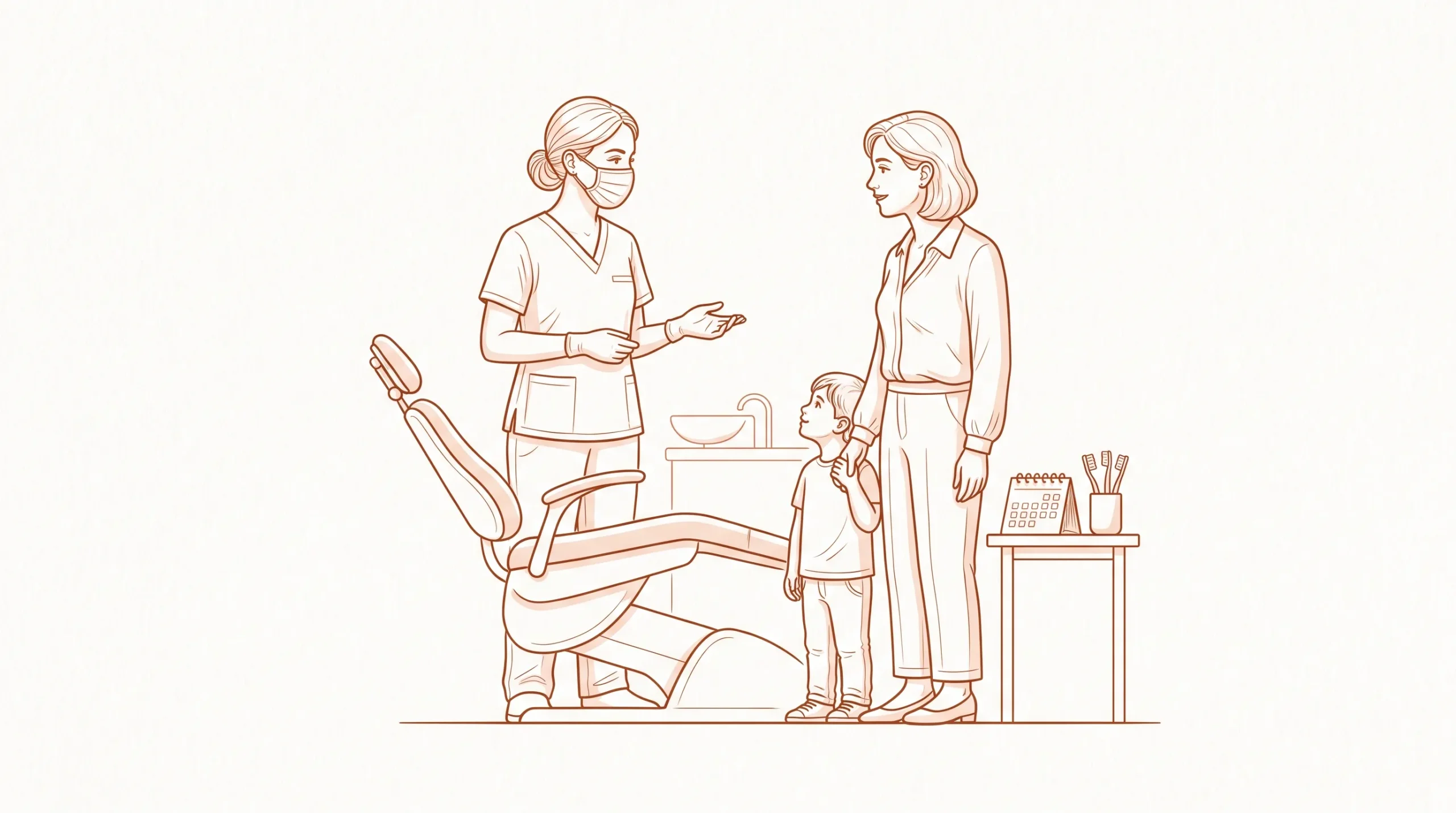
Families often include people with very different dental needs. A toddler, a teenager, a pregnant parent and a grandparent may all need different advice. That is why a single appointment pattern may not suit everyone.
For children, your dental care family plan might include early dental visits, help with brushing, advice about thumb sucking or dummies and conversations about diet. CP Dental has more detail in its guide to dental care for children.
Teenagers and young adults may need support with wisdom teeth, sports mouthguards, orthodontic questions, diet, oral piercings or gum care. Adults may need monitoring of fillings, crowns, gum health, tooth wear, sensitivity or cosmetic concerns. Older adults may have additional considerations such as dry mouth, medications, dentures, implants or changes in dexterity.
| Family member | Planning focus | What to discuss with the dentist |
|---|---|---|
| Babies and young children | Early visits, brushing help, diet, habits | Tooth eruption, fluoride toothpaste, thumb sucking, injury prevention |
| School-aged children | Check-ups, cleaning, mouthguards, independence | Brushing technique, fissure sealants if suitable, sports protection |
| Teenagers | Orthodontic questions, wisdom teeth, diet, gum care | Braces or aligner suitability, radiographs if indicated, oral hygiene routines |
| Adults | Preventive care, gum health, existing dental work | Sensitivity, grinding, pregnancy, medical changes, restorative options |
| Older adults | Dry mouth, dentures, implants, dexterity, medications | Gum health, chewing comfort, oral cancer checks, cleaning aids |
This table is a guide only. A dentist can assess each person and explain what is appropriate based on their individual needs.
Budget without putting off necessary assessment
Cost is a real part of planning family healthcare. It can be helpful to separate routine preventive care from unexpected treatment needs, then build a small buffer where possible. Preventive appointments may help identify concerns early, although they cannot guarantee that future treatment will be avoided.
A dental care family budget might include check-ups, professional cleaning where recommended, mouthguards, fillings, orthodontic assessments or replacement of old dental appliances. Some families use private health insurance, some use savings and some may be eligible for government support.
The Child Dental Benefits Schedule is an Australian Government program that provides access to basic dental services for eligible children. Eligibility and limits can change, so it is best to check current details through Services Australia rather than relying on older information.
If your family does not have private health insurance, you may find CP Dental’s guide to planning dental care without private health insurance useful. It explains ways to think about prevention, public dental options and treatment planning without assuming one payment approach suits everyone.
Know what to do when something changes
Even with good planning, dental problems can come up suddenly. Toothache, swelling, a broken tooth, a knocked tooth, uncontrolled bleeding or signs of infection should be assessed promptly. If someone has facial swelling, difficulty breathing, difficulty swallowing or a serious injury, seek urgent medical care.
Your dental care family plan should include the practice contact details, Medicare or health fund details if relevant and a note about any allergies or medical conditions. This can make it easier for another parent, carer or family member to help if you are unavailable.
For less urgent concerns, such as mild sensitivity or a rough edge on a filling, it is still worth arranging an assessment rather than guessing at the cause. Dental symptoms can have several possible explanations, and the right option depends on what is found during an examination.
Keep records so decisions are easier next time
A simple record can make family dental planning much smoother. You do not need a complex system. A note in your phone, a shared calendar or a folder for dental documents is often enough.
Record appointment dates, recommended review intervals, treatment plans, consent information, radiograph dates if provided and any follow-up instructions. If your child is eligible for the Child Dental Benefits Schedule, keep a note of current eligibility and any information given about remaining benefits.
This record is also useful when children move into teenage years or young adulthood. It can help them understand their own oral health history and take more responsibility for appointments, daily care and treatment decisions.
Frequently asked questions
How often should a busy family book dental check-ups? The right interval depends on each person’s oral health, age, decay risk, gum health, medical history and previous treatment. Some people are advised to attend about every six months, while others may need a different schedule. Your dentist can recommend a review interval after an examination.
Should the whole family see the dentist on the same day? It can be convenient, but it does not suit every family. Young children, anxious patients or appointments involving more complex concerns may benefit from separate visits. When booking, ask what timing may be appropriate for the type of appointment each person needs.
What should I do if my child is nervous about the dentist? Keep the conversation calm and factual. Avoid using dental visits as a threat, and try not to promise that nothing will feel uncomfortable. A short introductory visit may be suitable for some children, depending on their needs and the practice’s appointment availability.
Can a family dental plan include cosmetic dentistry? It can, provided cosmetic treatment is considered carefully and only after an assessment. Options such as whitening, veneers or aligners are not suitable for everyone. Your dentist can explain possible benefits, limitations, risks and alternatives based on your oral health and goals.
What if we have not been to the dentist for a long time? You do not need to feel embarrassed. A check-up can help identify your current oral health needs and discuss priorities. The first step is usually an assessment, then your dentist can explain any findings and options in a manageable way.
Planning care with CP Dental
A family dental plan is simply a way to make oral health easier to manage alongside work, school and everyday life. It does not need to be perfect, and it can change as your family changes.
To discuss your concerns, you can book an appointment with the team at CP Dental at the Coopers Plains, Mater Hill or Emerald location. A dental examination can help determine what each family member may need and which options may be appropriate.