Regular dental check-ups are not only for when something hurts. They give your dentist a chance to check for early signs of tooth decay, gum disease, wear, cracks and soft tissue changes before they become more difficult to manage. If you are looking for a Coopers Plains dental clinic, it is often because you want practical, local care that helps you understand what is happening in your mouth and what options may be appropriate.
A check-up is not a one-size-fits-all appointment. Your dentist will consider your teeth, gums, medical history, past dental work, daily habits and any symptoms you have noticed. The aim is to assess your current oral health, explain any findings clearly and discuss prevention or treatment options only where they are clinically relevant.
The Australian Dental Association’s consumer site, Teeth.org.au, explains that dental check-ups can include an examination, professional cleaning where needed and advice about looking after your teeth and gums at home. For many people, that regular review is what keeps small changes from going unnoticed.
Why dental check-ups matter even when your teeth feel fine
Dental problems do not always cause pain in the early stages. A small area of decay may not ache. Early gum inflammation may show up as bleeding when brushing, but it can also be mild enough that you dismiss it. A cracked filling, worn tooth surface or bite problem may only become obvious once a tooth breaks or sensitivity develops.
During a check-up, your dentist is looking for signs that may not be easy to see in your own mirror. This may include softened tooth enamel, plaque and calculus build-up, changes around existing fillings or crowns, gum pocketing, tooth mobility, ulcers that are not healing and signs of grinding or clenching.
Regular dental care also gives you a clearer record over time. If your gums are measured at one visit, your dentist can compare those measurements later. If a filling is being watched, the team can monitor whether it is stable or deteriorating. This is one reason seeing the same Coopers Plains dental clinic for ongoing care can be useful, as your history and previous findings can help guide decisions.
What a Coopers Plains dental clinic looks for during a check-up
At a Coopers Plains dental clinic, a routine check-up is usually more detailed than a quick look at the teeth. Your dentist may ask about sensitivity, bleeding gums, jaw discomfort, medical conditions, medications, smoking or vaping, diet and how you clean between your teeth. These details can affect your risk of dental disease and the advice you receive.
Your appointment may include several checks, depending on your needs and what is clinically appropriate.
| Area checked | What your dentist may look for | Why it matters |
|---|---|---|
| Teeth | Decay, cracks, wear, erosion, sensitivity and tooth structure changes | Early findings may allow for simpler preventive care or less complex treatment options |
| Gums | Bleeding, inflammation, gum recession, pocketing and plaque build-up | Gum health supports the teeth and can affect long-term tooth stability |
| Existing dental work | Fillings, crowns, bridges, implants or previous root canal treated teeth | Restorations can wear, chip or develop gaps over time |
| Bite and jaw | Signs of grinding, clenching, jaw joint strain or uneven tooth contact | Bite forces can contribute to tooth wear, cracks and muscle discomfort |
| Soft tissues | Tongue, cheeks, lips, palate and throat area | Some ulcers, lumps or colour changes may need monitoring or referral |
| Oral hygiene routine | Brushing technique, flossing or interdental cleaning, diet and fluoride exposure | Small changes at home can reduce the risk of future problems |
Not every check-up requires the same tests. Dental X-rays, for example, are generally taken only when your dentist believes they are needed to assess areas that cannot be checked visually, such as between teeth, under old restorations or around tooth roots. X-rays involve a small amount of ionising radiation, so your dentist should weigh the likely benefit against your individual circumstances.
How check-ups help prevent common dental problems
Preventive care does not mean nothing will ever go wrong. It means your dentist can identify risk factors, monitor changes and suggest steps that may reduce the chance of problems developing or progressing. Treatment outcomes and experiences vary between patients, and a clinical assessment is always needed before recommending care.
Tooth decay
Tooth decay occurs when bacteria in plaque use sugars from food and drinks to produce acids that weaken the tooth surface. Over time, this can create a cavity. Early decay may sometimes be managed with preventive strategies, depending on how advanced it is, but deeper decay may require a filling or other treatment.
If you want to understand the process in more detail, CP Dental has a patient guide explaining why tooth decay happens and what causes it. During a check-up, your dentist can look for early signs of enamel change and talk through practical steps such as fluoride use, diet timing, brushing technique and cleaning between teeth.
Gum disease
Gum disease can range from gingivitis, which is inflammation of the gums, to periodontitis, a more advanced condition affecting the structures that support the teeth. Bleeding gums are common, but they are not something to ignore if they happen regularly.
A dental check-up may include measuring the gums and checking for plaque and calculus, also known as tartar. Calculus cannot be removed by brushing at home, so professional cleaning may be recommended when it is present. If gum disease is suspected, your dentist can explain whether you need monitoring, cleaning, changes to home care or further periodontal assessment.
Wear, cracks and old dental work
Teeth and restorations do a lot of work over many years. Grinding, clenching, acidic drinks, nail biting and normal chewing forces can contribute to tooth wear or small cracks. Fillings and crowns can also age, chip or develop gaps at the edges.
A check-up allows your dentist to monitor these areas before they cause bigger problems. In some cases, no treatment is needed right away, only review. In other cases, your dentist may discuss options such as repairing a restoration, adjusting a rough edge, protecting a tooth or investigating the cause of wear.
How often should you book a dental check-up?
There is no single interval that suits everyone. Some people are advised to attend around every six months. Others may need more frequent reviews, while lower-risk patients may be advised to attend less often. The right timing depends on your oral health, dental history, medical conditions, medications, age, diet, gum health and personal risk factors.
Healthdirect’s oral health information encourages regular dental care and seeking professional advice for oral health concerns. Your dentist can recommend a recall interval after assessing your mouth rather than relying on a general rule.
You may be advised to have check-ups more often if you have:
- A history of frequent tooth decay or many restorations
- Gum disease or bleeding gums that need monitoring
- Dry mouth related to medication, health conditions or lifestyle factors
- Orthodontic appliances, dentures, implants, crowns or bridges that need review
- A medical condition that may affect oral health, such as diabetes
If you are unsure when you last had a dental appointment, it is reasonable to book an assessment rather than waiting for symptoms. A check-up can help establish a baseline and give you a clearer plan.
What to expect at a routine dental check-up
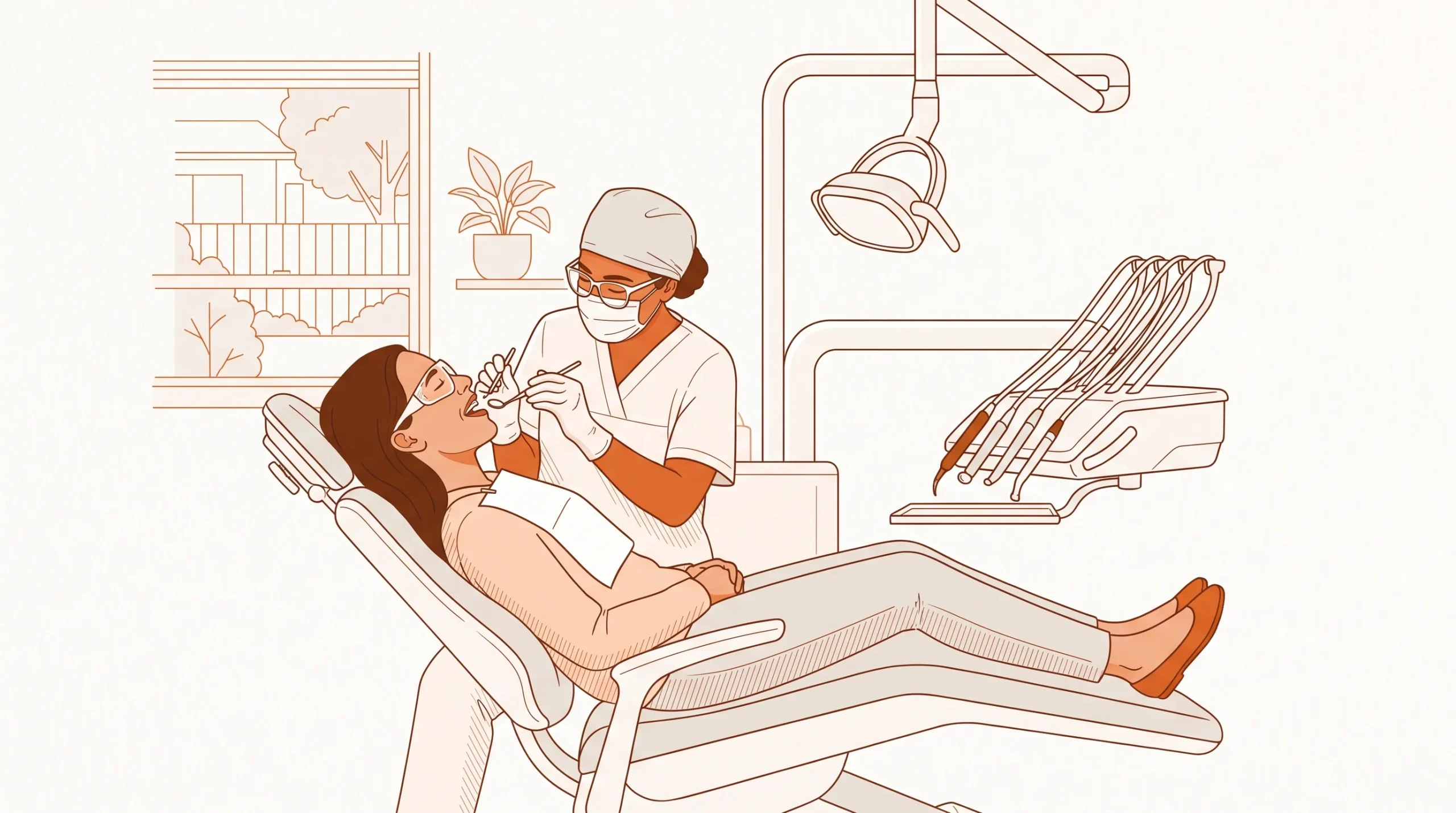
A routine dental check-up usually begins with a conversation. Your dentist may ask whether you have pain, sensitivity, bleeding gums, headaches, jaw symptoms or concerns about appearance or function. They may also ask about your general health and medications because these can influence your mouth and the safety of dental care.
The examination itself may involve checking each tooth, gently assessing the gums and looking at the soft tissues of the mouth. Your dentist may use a small mirror, probe and good lighting. If a professional clean is recommended, it may involve removing plaque and calculus, then polishing the teeth. Some patients notice short-term tenderness or sensitivity after cleaning, especially if gums are inflamed or there is a lot of build-up.
If X-rays are clinically indicated, your dentist should explain why they are being recommended. X-rays can help detect issues that are not visible during a standard examination, but they are not required at every visit for every person.
The final part of the appointment is often the most useful: your dentist explains what they found. If no treatment is needed, you may leave with prevention advice and a recommended review interval. If something needs attention, your dentist can discuss the potential benefits, risks, limitations and alternatives before you decide what to do.
Choosing a Coopers Plains dental clinic for ongoing care
For people in Coopers Plains and nearby Brisbane southern suburbs such as Salisbury, Moorooka, Sunnybank, Robertson and Archerfield, having a local dental practice can make regular check-ups easier to fit around work, school and family routines. Convenience does not replace clinical quality, but it can make preventive care more realistic over time.
Choosing a Coopers Plains dental clinic for regular visits also means your dental records, X-rays where taken, gum measurements and previous treatment notes can be reviewed together. This continuity may help your dentist notice gradual changes and discuss options in context.
If you are planning dental care for your household, CP Dental’s guide to dental care in Coopers Plains explains what general appointments can involve and when routine or urgent care may be appropriate. For families with young children, this article on when children should have their first dental visit may also be useful.
When a routine check-up should not wait
Routine check-ups are valuable, but some symptoms need prompt advice rather than waiting for your next planned appointment. Dental pain and swelling can have several causes, and only a dentist or appropriate health professional can assess what is happening.
Arrange dental advice as soon as practical if you notice:
- Persistent or worsening toothache
- Facial swelling, gum swelling or pus around a tooth
- A broken tooth, knocked tooth or dental injury
- Bleeding that does not settle after injury or dental treatment
- An ulcer, lump or mouth sore that does not heal
- Fever, feeling unwell with dental symptoms or difficulty opening your mouth
If you have difficulty breathing or swallowing, or swelling that is spreading quickly, seek urgent medical care. These symptoms should not be managed as a routine dental booking.
Frequently Asked Questions
How long does a dental check-up usually take? Appointment length varies depending on what needs to be assessed, whether X-rays are required and whether a clean is completed at the same visit. When you book, the practice can advise what to expect for your appointment type.
Does every check-up include a professional clean? Not always. A clean may be recommended if plaque or calculus has built up, but your dentist will assess your gums and teeth first. Some patients need more detailed gum care, while others may only need routine preventive cleaning.
Are dental X-rays needed at every check-up? No. X-rays should be based on clinical need, your symptoms, your dental history and what your dentist can or cannot see during the examination. Your dentist can explain the reason if X-rays are recommended.
Can a dental check-up find oral cancer? A check-up can include a soft tissue assessment, where your dentist looks for ulcers, lumps, colour changes or areas that may need review. This is a screening step, not a guarantee that every condition will be detected, and suspicious findings may require referral or further investigation.
What if I have not seen a dentist for several years? You can still book a check-up. Your dentist can assess your current oral health, explain findings without judgement and discuss suitable options if treatment is needed. The first visit may focus on gathering information and deciding priorities.
What should I ask a Coopers Plains dental clinic at my appointment? Useful questions include how your gums are tracking, whether any areas are being monitored, how often you should return, what you can do at home and what the benefits, risks and alternatives are for any recommended treatment.
Book a dental check-up in Coopers Plains
A dental examination can help determine the current condition of your teeth and gums, identify areas that may need monitoring and guide prevention that suits your circumstances. All dental procedures carry potential risks and benefits, and suitability depends on your individual oral health, medical history and treatment goals.
To discuss your concerns, you can book an appointment with CP Dental and arrange an assessment with the team at CP Dental Coopers Plains.